Alibaba Qwen & Quark AI Glasses Roadmap
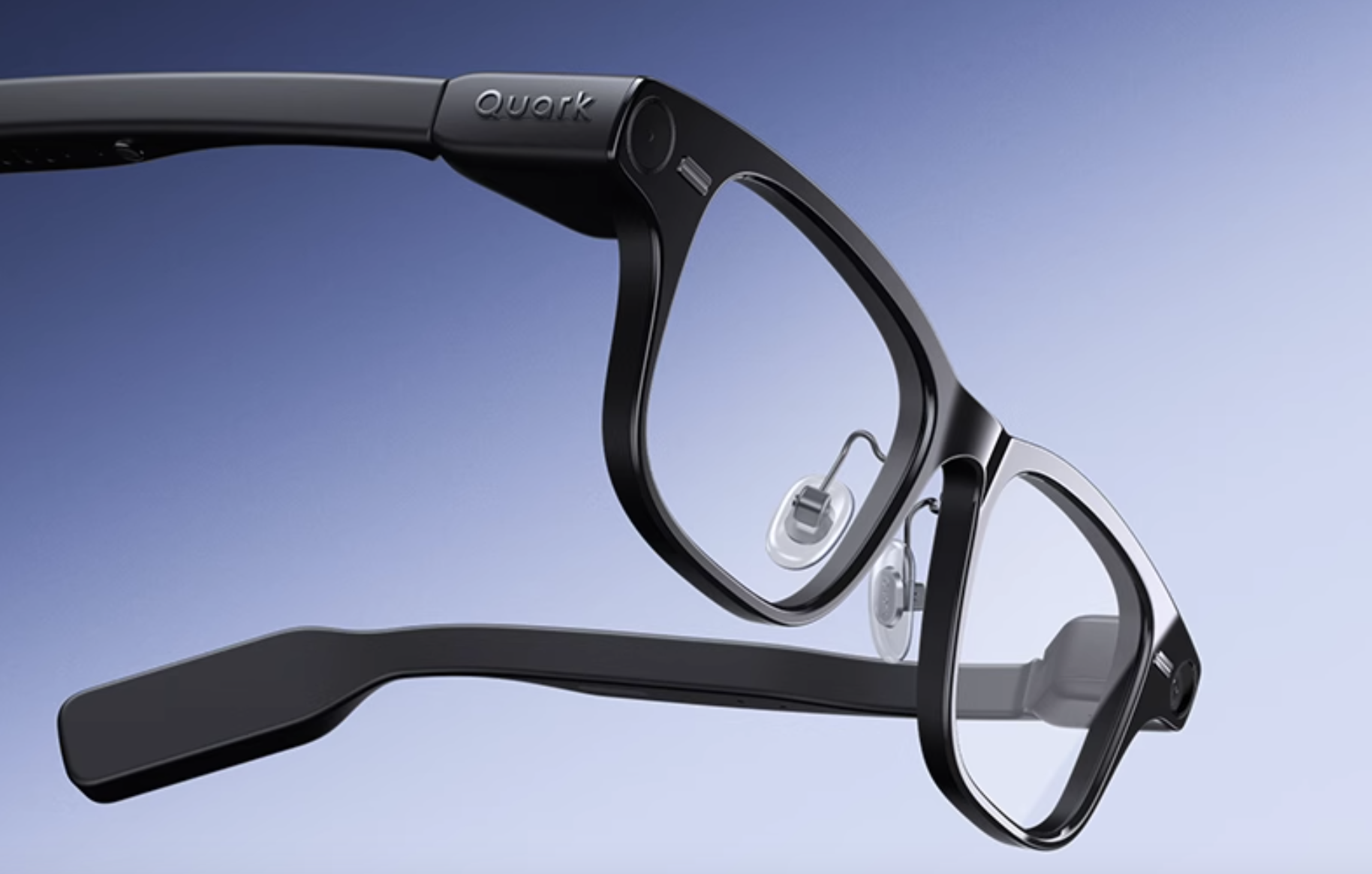
Alibaba's smart-eyewear lineup spans Quark-branded G1 and S1 models and newer Qwen-branded glasses. Features differ by model: the G1 is display-less, while the S1 includes an in-lens display. Do not assume that every feature announced for one model applies to the whole range.
Roadmap dates: confirmed milestones
These dates are based on public company announcements. They are milestones, not a promise that every future capability will arrive on a particular date.
IDC reported Alibaba at 2.6% of its Q2 2026 smart-glasses market table.
Alibaba Cloud announced a new Qwen Glasses N1 series with first-person HD capture from a 50 MP sensor; eye-tracking interaction was specified for the N1 Pro model.
Alibaba Cloud said official sales were scheduled to begin on 13 October. This announcement alone does not confirm current stock or availability in every region.
Sources: Alibaba Cloud, 25 September 2026 · Alibaba Group, Apsara Conference · IDC, Q2 2026 market table
Separate product families
The Quark S1 and G1 models announced in 2025 and the Qwen Glasses N1 series announced in September 2026 should be treated as distinct product generations. Specifications and features such as in-lens display, camera resolution and eye tracking are model-specific. International availability and support can differ from the mainland China launch schedule.
Display-equipped and display-less models
Alibaba's eyewear range is not one interchangeable product. The Quark G1 is a display-less AI-glasses model, while the Quark S1 adds an in-lens display; the Qwen Glasses N1 series is a later announced line with model-specific camera and interaction features. Comparisons should name the exact model and distinguish announced features from confirmed availability.
AI and ecosystem
A voice assistant becomes more useful when it can respond to the wearer's immediate context. Camera input can help identify objects or interpret a scene, while audio output can keep interactions hands-free. These capabilities also raise important questions about consent, recording indicators, data retention and bystander privacy.
What to watch next
Watch for improvements in display brightness and clarity, battery life, prescription-lens support, frame choice, language coverage and the range of tasks that work reliably without a phone. Developer access and third-party services will also indicate whether the glasses are becoming a platform rather than a companion accessory.
Our outlook — analysis, not a launch prediction
The compelling possibility is a gradual transition: familiar AI glasses today, optional glanceable information as displays improve, and richer spatial experiences only when the hardware can support them comfortably. Alibaba has not guaranteed a particular timetable for every future capability. Treat unannounced product dates and rumoured specifications as speculation until the company confirms them.